
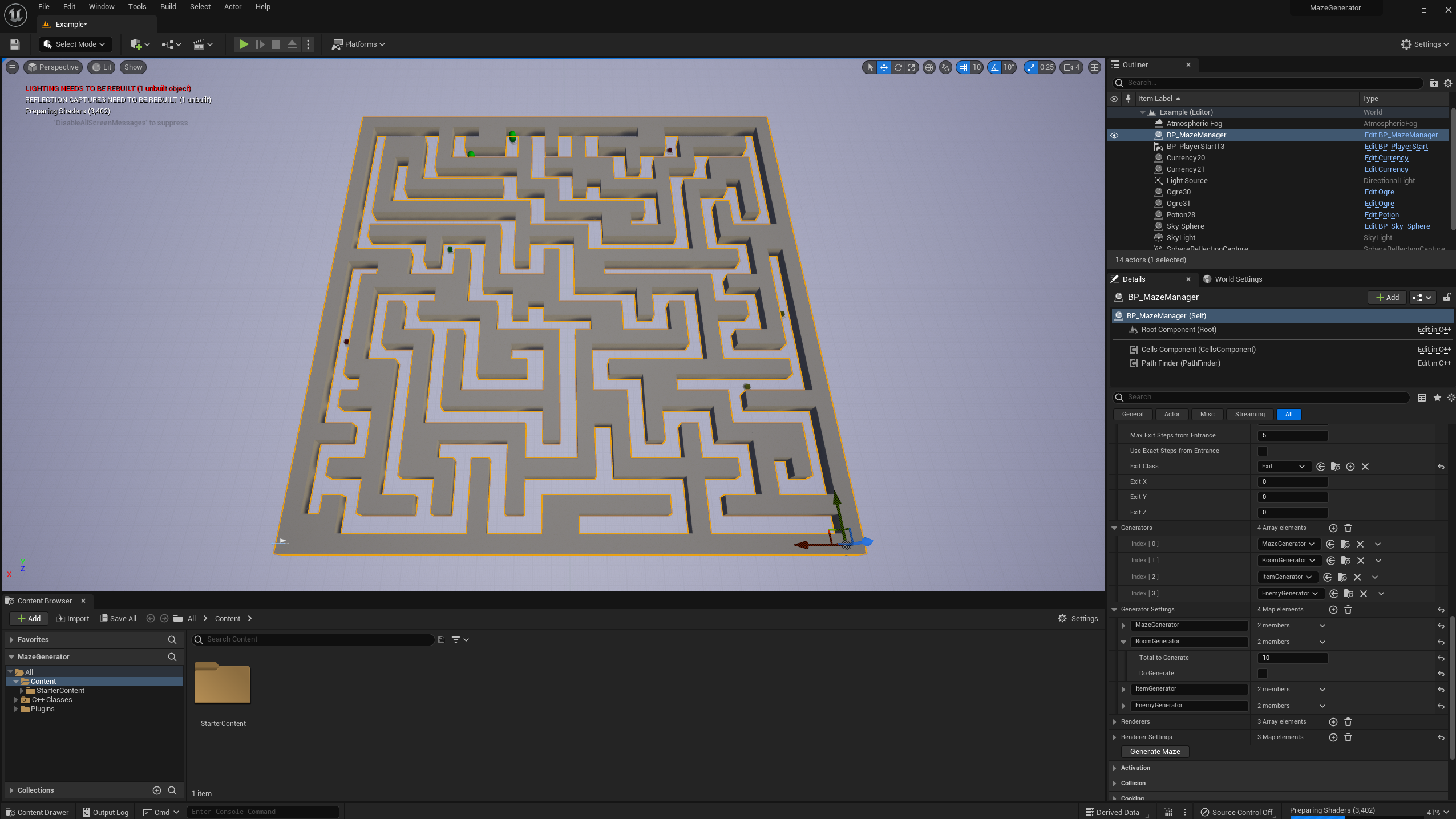
There is a common failure mode in procedural tooling: the generator returns a shape, but not enough context to make that shape useful.
Dungeons and Mazes was built to avoid that trap.
The important output is metadata
It is not enough to know that a cell is walkable. The useful questions are things like:
- Which room owns the cell?
- Is it part of a critical mission path?
- Is this a dead end, a hub, a lock, a key, or a secret?
- How do floors connect through stairs?
Once the generator answers those questions directly, it stops being a toy demo and starts becoming a real production surface for gameplay logic.
That is the standard the addon was built against.